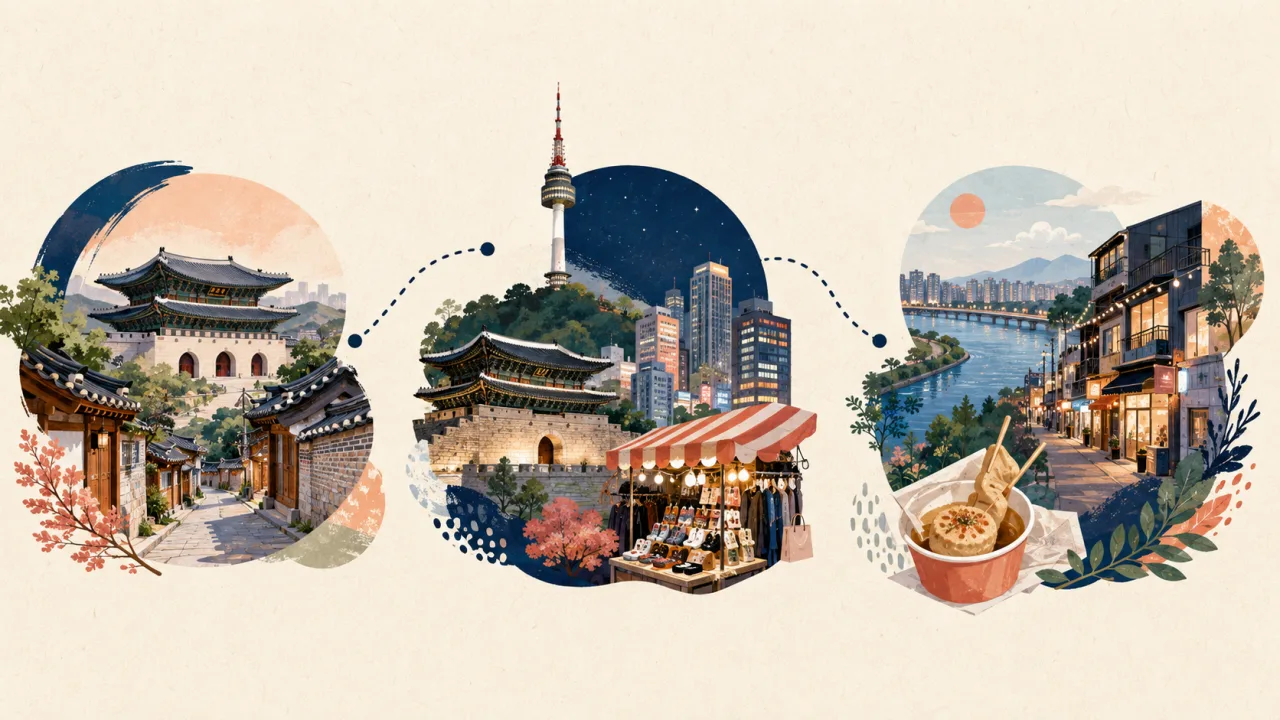
Three full days in Seoul are enough for a useful first look, but not enough to chase every famous place. Building each day from a list of attractions often creates too much travel across the city.
This itinerary uses one area cluster per day. It gives you a historic Seoul day, a central market and Namsan day, and a western Seoul day that continues naturally into the evening.
Quick answer
Day 1: Gyeongbokgung Palace, a respectful daytime visit around Bukchon, and Insadong.
Day 2: Namdaemun Market, Namsan, and Myeongdong.
Day 3: Mangwon Market, Mangwon Hangang Park, and Hongdae via Mangwon or Hapjeong Station.
If Gangnam or COEX matters more to you than Hongdae, replace Day 3 rather than squeezing southern Seoul into another day.
The plan assumes three full sightseeing days. Do not count an evening arrival or an early airport departure as one of them.
Before you assign the days
Put the palace day on a day when Gyeongbokgung is open. The palace is normally closed on Tuesdays, although the closure can shift when it overlaps a public or substitute holiday. Seasonal opening and last-admission times also change, so check the official calendar before fixing the order.
Use the clearest-weather day for Namsan. If rain or low cloud removes the view, swap Day 2 with Day 3. The neighborhoods still work in a different order because this plan does not depend on timed tickets.
If you have not chosen a hotel area, settle that before fine-tuning the route. Our Myeongdong, Hongdae, and Gangnam comparison explains how the same itinerary feels different from each base.
| Day | Area cluster | Walking load | Best adjustment |
|---|---|---|---|
| 1 | Gyeongbokgung, Bukchon, Insadong | Highest: palace grounds, uneven streets, long periods outdoors | Skip the residential alleys and continue to Insadong if energy or weather is poor |
| 2 | Namdaemun, Namsan, Myeongdong | Medium to high: the Namsan climb or access route decides the effort | Visit the lower plaza or remove the observatory when visibility is poor |
| 3 | Mangwon, Hangang, Hongdae via Hapjeong | Medium: flexible walking plus a local bus or short subway connection | Shorten the river section in bad weather or replace the entire day with COEX and Bongeunsa |
Day 1: palace Seoul, Bukchon, and Insadong
Morning: start at Gyeongbokgung Palace
Begin at Gyeongbokgung rather than adding it after lunch. Palace grounds take longer than the main gate and central courtyard suggest, and the first morning gives you room to slow down without pushing the rest of the day late.
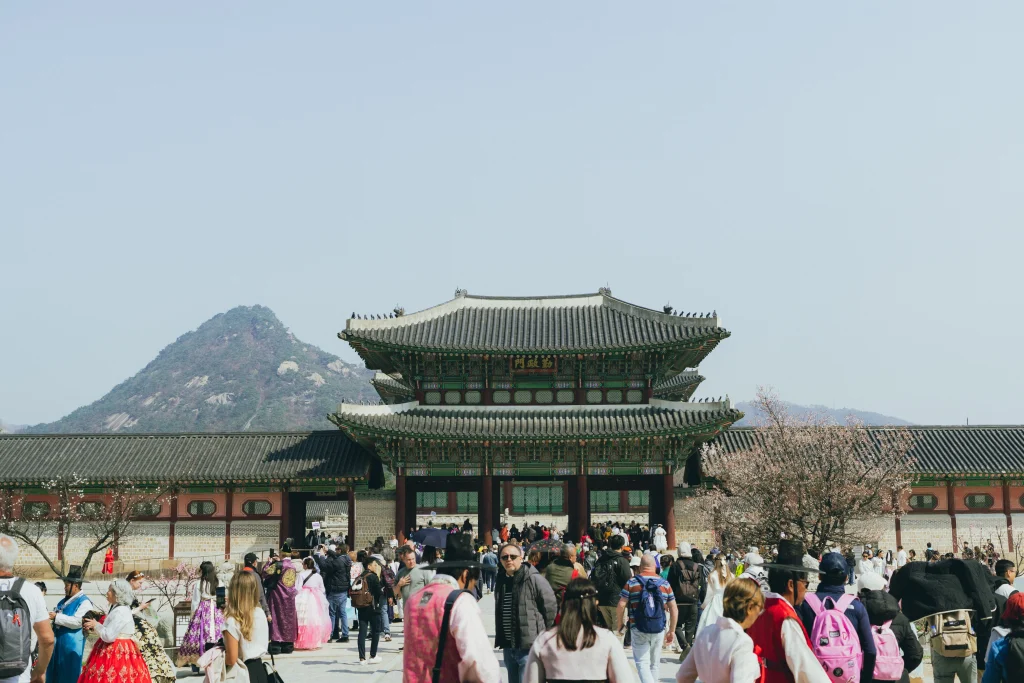
Choose what kind of visit you want before entering. A short visit can focus on the main ceremonial spaces and one quieter part of the grounds. A longer visit can include more of the palace grounds. Allow roughly two to three hours for the palace itself, then keep about an hour for lunch. These are planning allowances rather than opening hours.
Check the official seasonal hours and last admission on the morning of your visit. If the palace is closed, move this whole day rather than replacing it with another palace without checking that palace’s own weekly closure.
Lunch: stay near the palace or move toward Anguk
Eat near the palace exit that keeps you moving toward Bukchon and Insadong rather than crossing Seoul for a famous lunch. The useful lunch is the one that keeps the afternoon route intact. Use the Gyeongbokgung and Bukchon food guide to choose a meal that fits the direction you plan to walk next.
If anyone in your group needs a longer rest, this is the day to take it. The palace and nearby streets can create more standing and walking than the map suggests.
Lunch option: Hwangsaengga Kalguksu
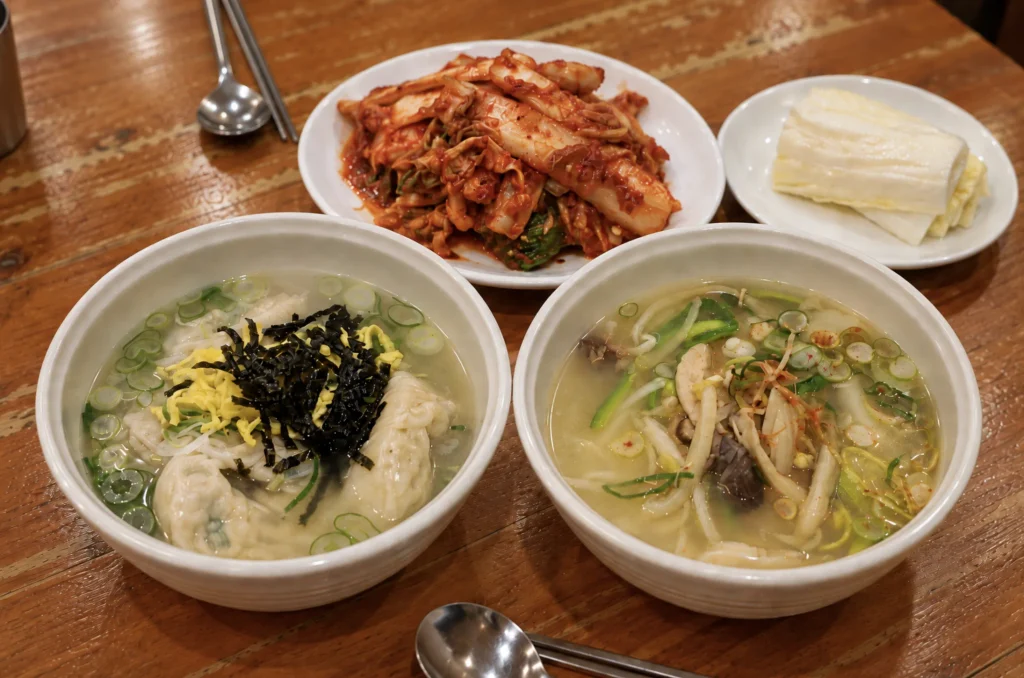
Hwangsaengga Kalguksu fits this route because it is on the Bukchon side of the palace area, at 78 Bukchon-ro 5-gil. It keeps you moving toward the afternoon rather than sending you across the city for lunch.
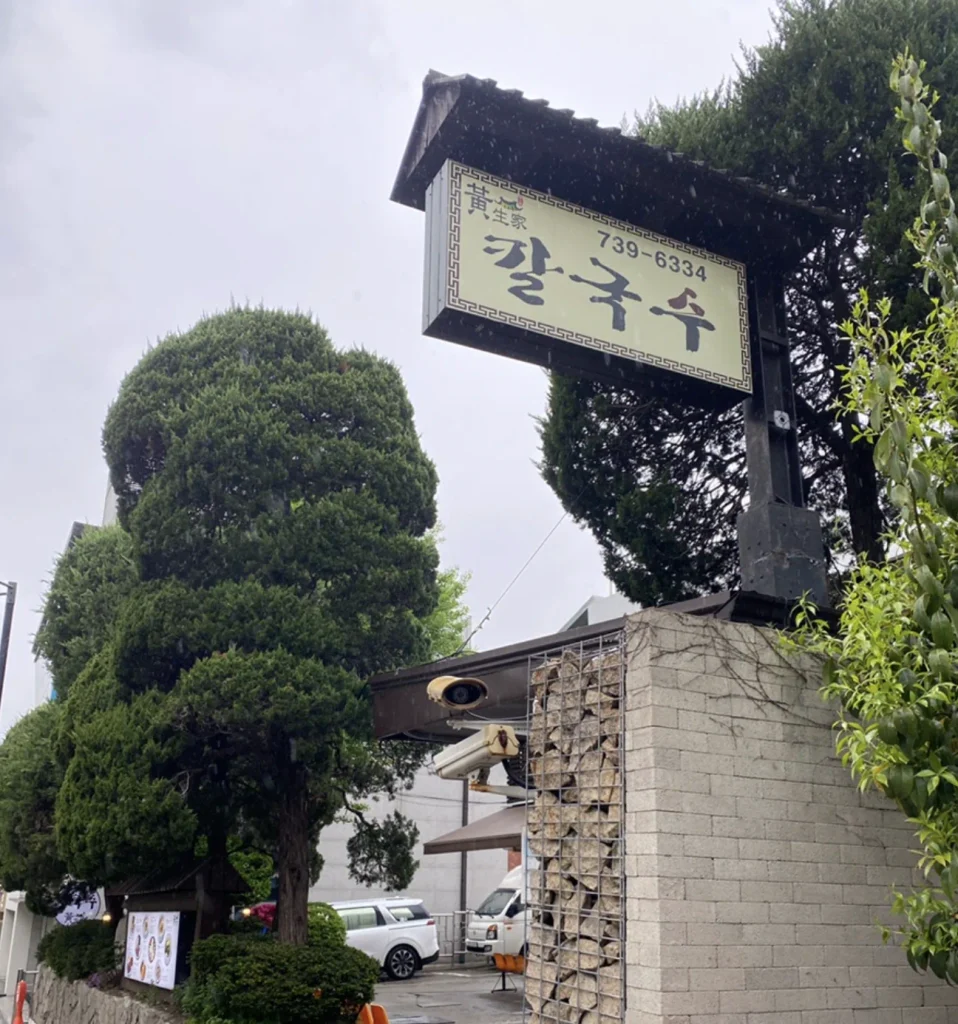
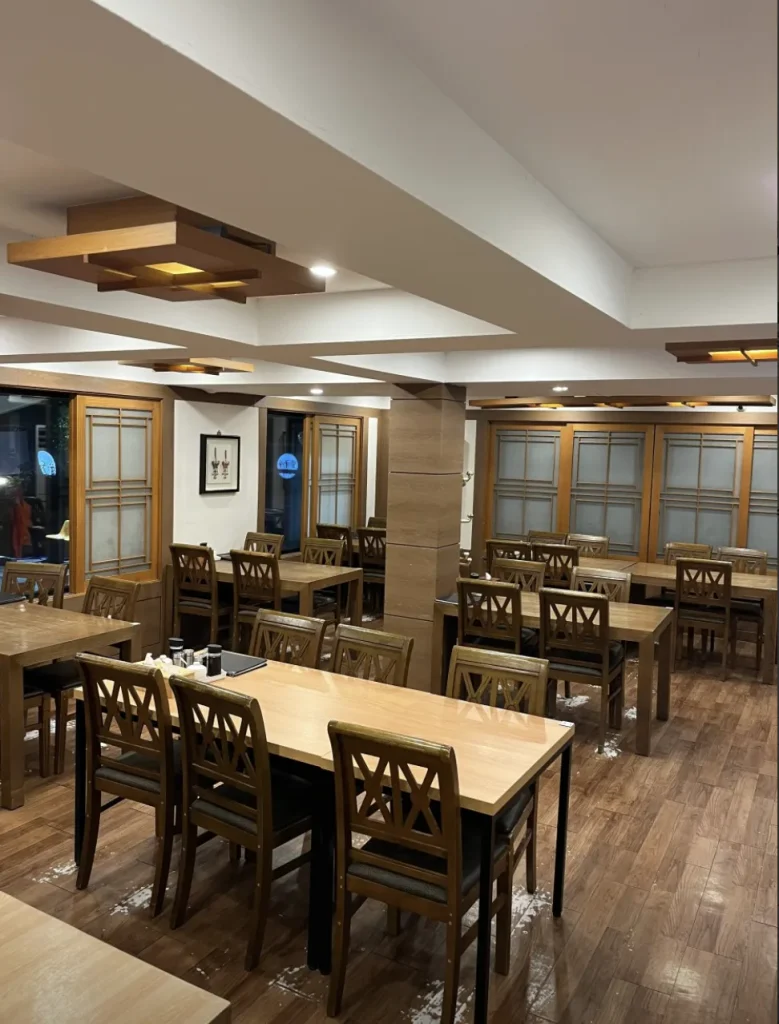
The two useful orders for a first visit are sagol kalguksu, knife-cut noodles in beef-bone broth, and wang mandu, large dumplings that can be shared. Visit Seoul currently lists service from 11:00 and warns that peak lunch and dinner periods can bring long waits.
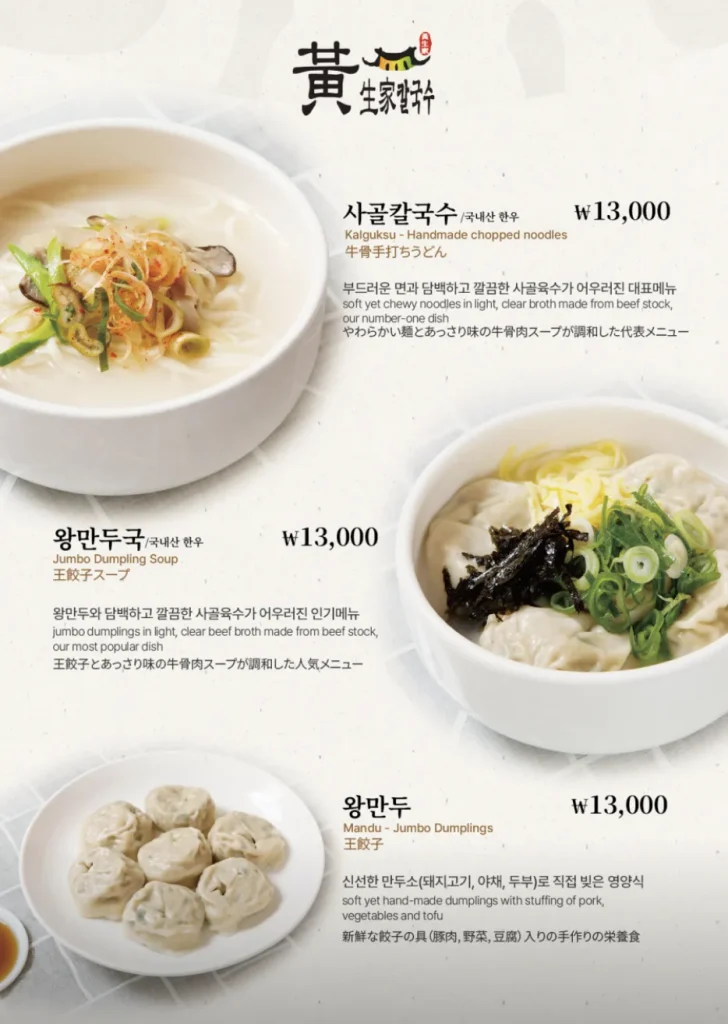
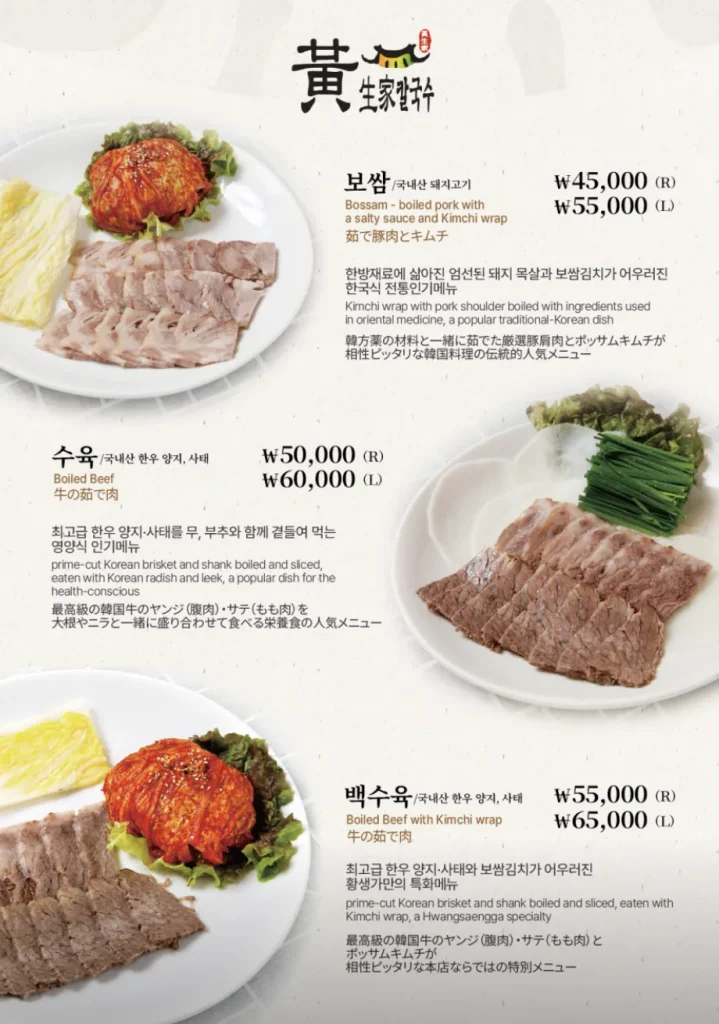
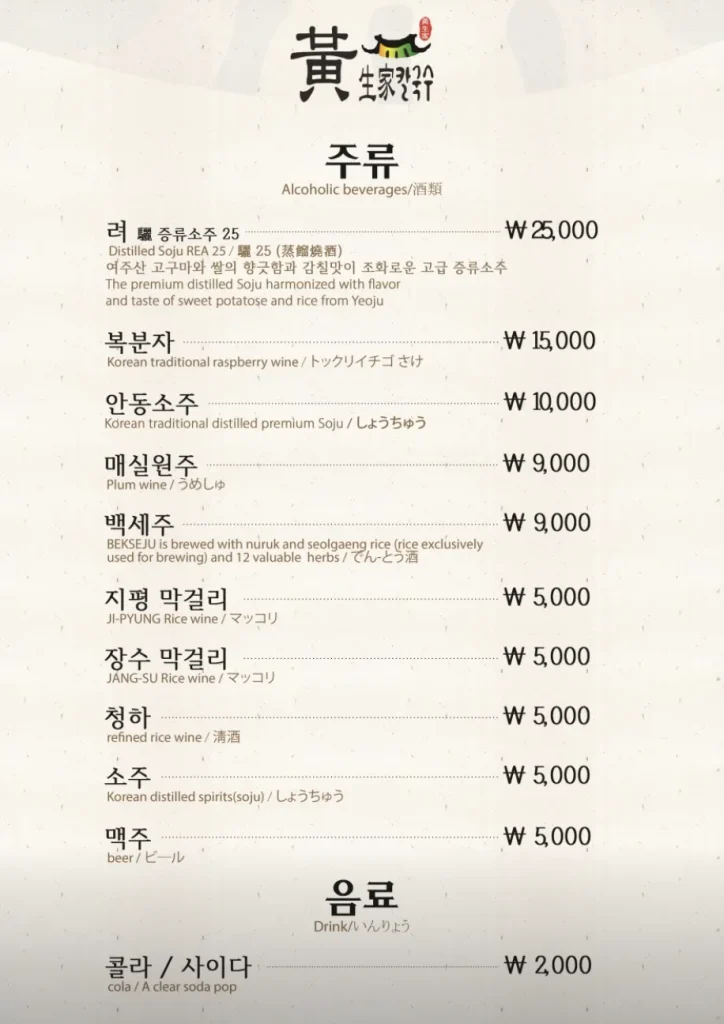
This is not a good default for a vegetarian or someone avoiding beef, and the dumplings may contain meat. Check ingredients for allergies or religious dietary requirements. If the queue would delay the Bukchon visit, eat at another restaurant near Anguk and keep the route intact.
Early afternoon: treat Bukchon as a residential neighborhood
Bukchon is not an open-air theme park. People live in these streets, and Seoul now restricts tourist visits to the designated red zone from 17:00 to 10:00. Fines have applied since March 1, 2025.
Visit only during the permitted daytime window, follow the posted zone map, keep voices low, and do not block entrances. You do not need to enter every famous alley to understand the area. Public hanok facilities, cultural spaces, and streets outside the restricted residential section can give the afternoon a clearer purpose.
Allow about one hour for posted visitor routes and public cultural facilities in Bukchon. If the red-zone rules do not fit your timing or the group is tired, continue toward Insadong instead. Removing the residential lanes is better than rushing through them at the wrong time.
Late afternoon and evening: finish in Insadong
Insadong works as the slower second half of the day. Visit Seoul presents it as an area for traditional culture, tea houses, galleries, and crafts. Choose one or two interests rather than stopping at every shop.
Allow two to three hours for Insadong and dinner. Add another nearby stop only if the group still has time and energy.
End the day before exhaustion turns Day 2 into a late start.
Day 2: Namdaemun Market, Namsan, and Myeongdong
Morning: use Namdaemun Market for browsing, not a checklist
Start around Namdaemun Market after breakfast or make the market your first meal stop. It is a large traditional market spread through streets near Seoul’s historic southern gate. Individual stores keep different hours, so a particular stall from an old recommendation may not be open when you arrive.
Allow roughly 90 minutes to two hours. Walk one section, choose what interests you, and leave room for Namsan.
If shopping is not important, spend less time here and move to Namsan earlier. The route still works.
If you plan to eat a full lunch near the cable car, use Namdaemun for browsing or one small snack. If the market becomes your main meal, skip the restaurant and continue to Namsan.
Getting to Namsan from Namdaemun Market
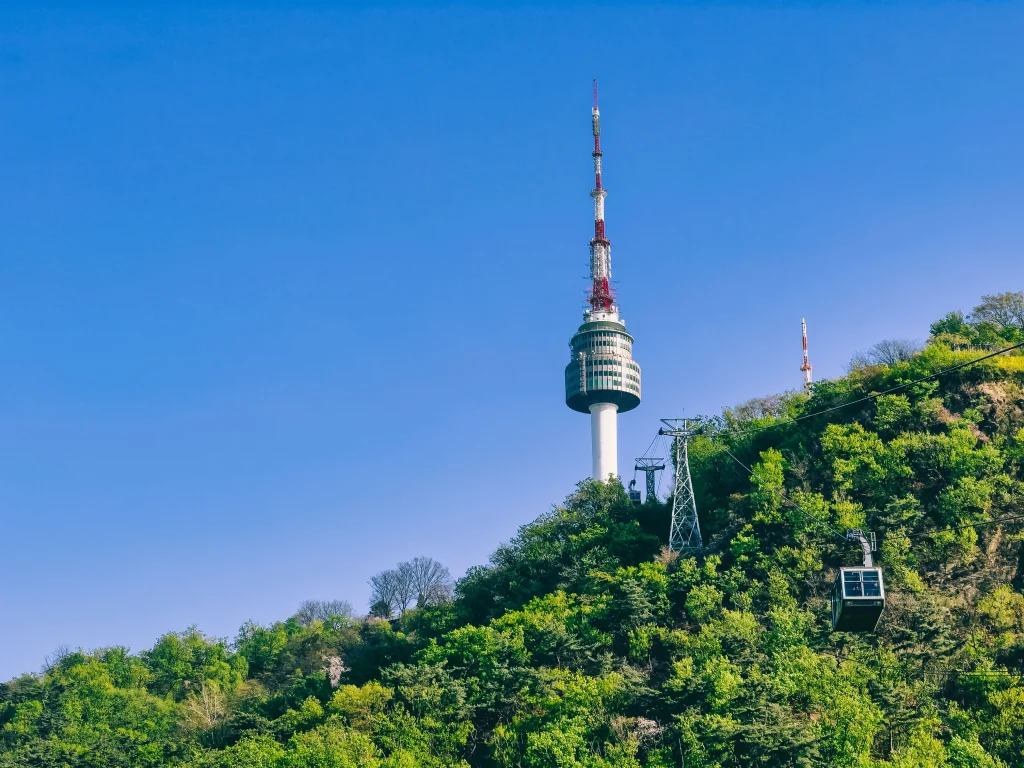
Use the Namsan Cable Car lower station at 83 Sopa-ro as the destination, not the tower summit. From the Hoehyeon side of Namdaemun Market, take Line 4 one stop to Myeongdong Station. Visit Seoul lists the cable-car approach as 571 m from Exit 4. Inspect the current walking route for slopes and steps. As a planning allowance, set aside about 25 to 40 minutes from the market edge to the lower station, excluding any cable-car queue. This and the later Hongdae transfer range are planning estimates, not tested journey times.
For less walking, take a taxi from the market to 83 Sopa-ro and compare the wait with the current road traffic. This gets you to the lower station, not directly to the observation deck.
Lunch option: Namsan SanChaeJip
Visit Seoul lists a cluster of Korean-style pork-cutlet restaurants near the cable-car area. A Namsan pork cutlet lunch here avoids another detour.
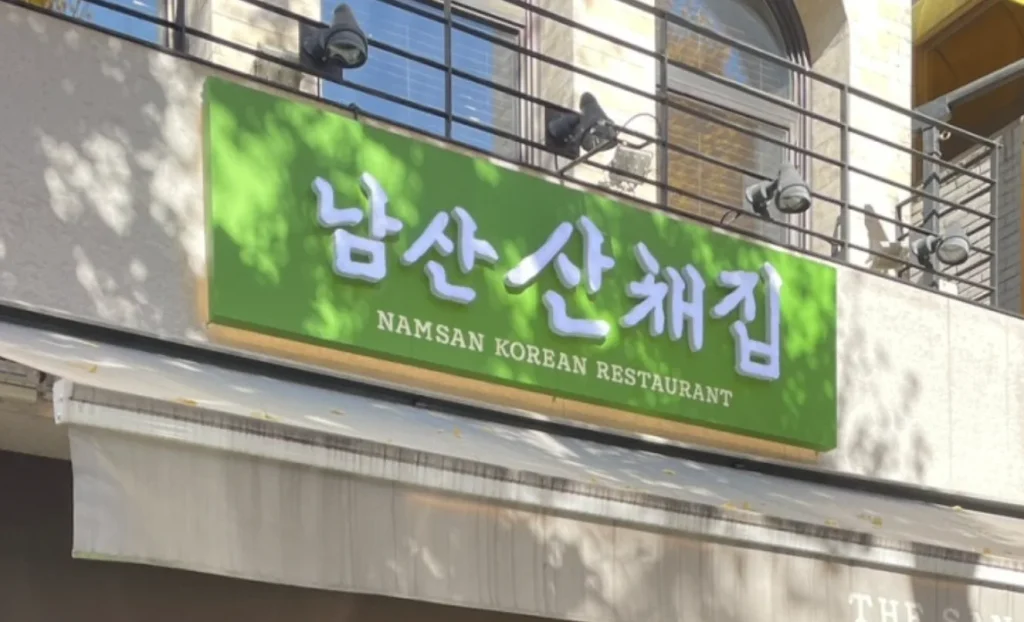
Namsan SanChaeJip, or 남산산채집, is the practical first choice for this itinerary. Search for 95 Sopa-ro near the cable-car approach. Current listed hours are 10:30 to 20:50, with last orders at 20:00; confirm the opening status before leaving Namdaemun. The menu reworks familiar Korean dishes into contemporary restaurant plates, including yukhoe bibimbap, pork cutlet, chive pancake, and kimchi-cheese pancake, so mixed groups have more than one style of meal to choose from. Open the current location in Google Maps before setting out.
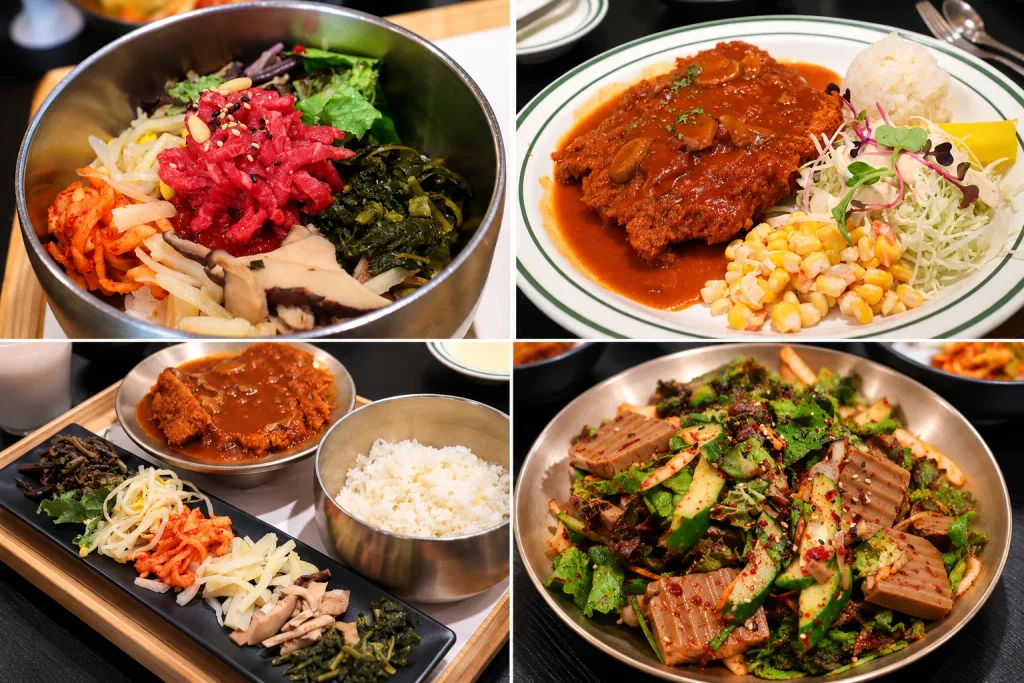
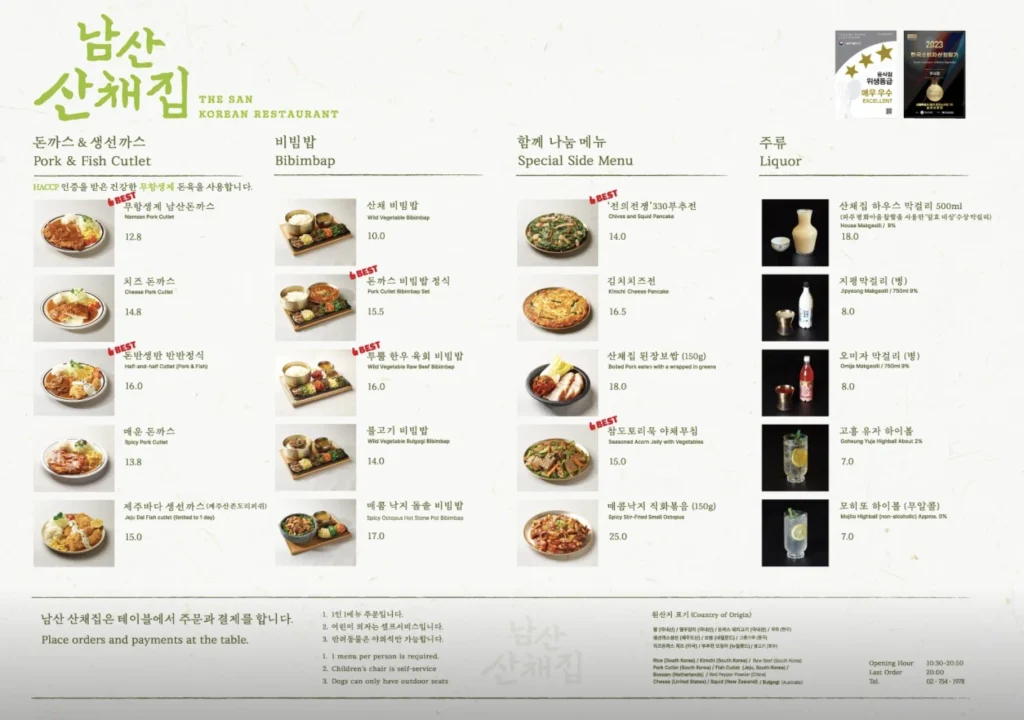
Ask about broth, sauce, fillings, and shared cooking surfaces if you have allergies or dietary restrictions. The English dish name alone does not confirm that an order is vegetarian, halal, or allergen-free.
Do not choose a restaurant because its sign claims to be the original Namsan pork cutlet. Check the current menu, opening status, queue, and recent reviews, then use another nearby pork-cutlet restaurant if the wait no longer fits the Namsan plan.
Afternoon: decide how much of Namsan you actually want
In this itinerary, Namsan means the mountain and tower area. Namsan Seoul Tower has a lower plaza and separate upper tower facilities, including the paid observation deck. Reaching the tower area and buying admission to the observation deck are separate decisions. You can enjoy the mountain and tower area without automatically buying an observatory ticket.
Choose the access method by the person who will find the route hardest. Walking gives you more time on the mountain but adds more distance. The cable car or current public transport can reduce some of that effort, but queues and operating changes still matter. Check the full route for slopes, steps, and elevator access on the day instead of following an old screenshot.
Allow two to three hours from the cable-car lower station through the tower area, and more if queues are long. If visibility is poor, use the lower plaza and mountain paths only briefly or skip the tower entirely. Paying for a high view makes little sense when low cloud hides the city.
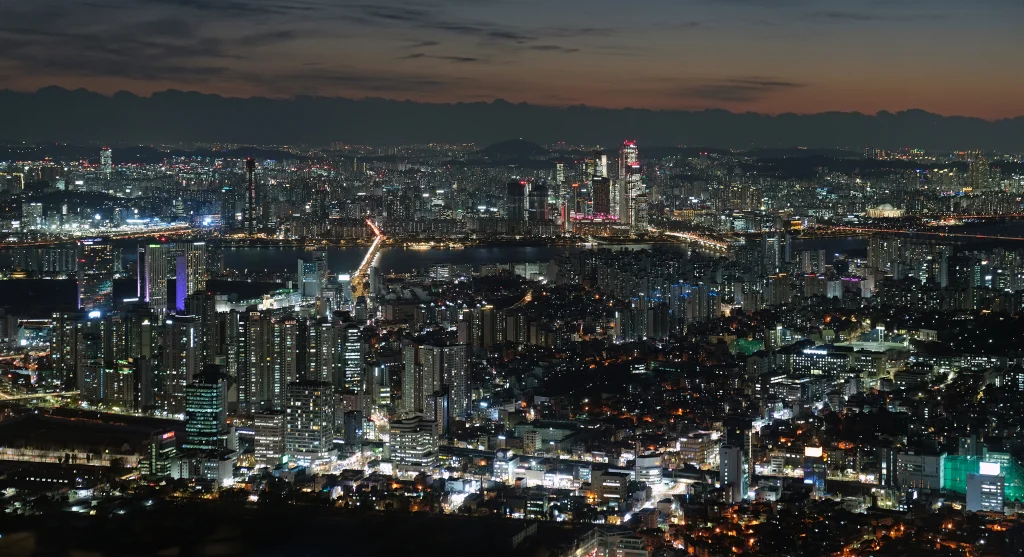
Evening: come down into Myeongdong
Myeongdong is a practical evening finish because shopping, restaurants, and visitor services are concentrated in the same central district. You can eat, shop, or simply walk through the busier streets without adding another major journey.
Do not turn the evening into a second full shopping day if everyone is tired from Namsan. Pick dinner and one priority, then return to the hotel.
If you are staying in this area, our Myeongdong hotel guide explains why the Myeongdong Station side and the Euljiro side create different repeated journeys.
Day 3: Mangwon, the Han River, Hapjeong, and Hongdae
Late morning: begin with Mangwon Market
Start later than the palace day and use Mangwon Market as an early lunch stop. Visit Seoul notes that operating hours vary by store, so arrive with a few possible foods rather than one stall that the whole day depends on. Allow about 60 to 90 minutes for the market.
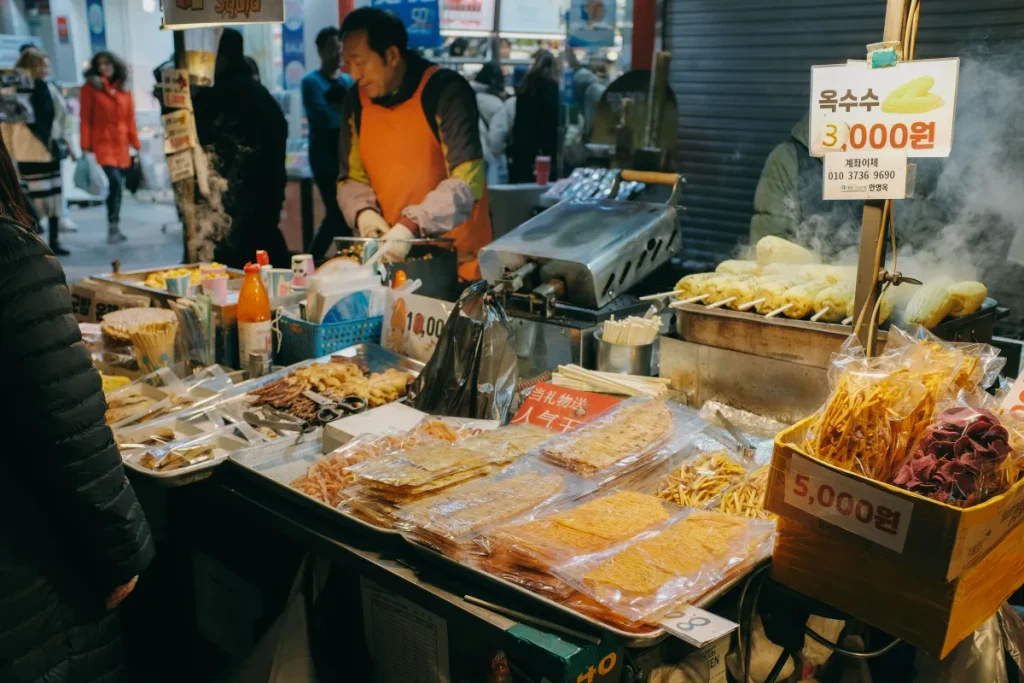
The market is useful here because Mangwon Hangang Park is nearby. Map the walk from the market to the park entrance you want to use and include it in the day’s walking load. Buy only what you can carry and dispose of properly.
Market lunch: share two or three foods
Mangwon Market works better as a tasting lunch than as a reservation at one restaurant. The market’s current store directory lists Uirak, Mangwon Dakgangjeong, and Hoonhun Hotteok.
A workable order for two people is one savory main plus one or two smaller items. Start with Uirak’s deep-fried stuffed pepper or a bowl of kalguksu, then share dakgangjeong or hotteok if you are still hungry. Ordering everything at the first stall makes the food harder to carry and leaves no room to try what looks good later.
Before ordering, check whether the stall has seating, how it accepts payment, and whether the food is practical to carry. Keep a payment alternative, check the current store map, and do not assume a popular stall will be open or have a short line. Ask about broth, fillings, sauces, and shared cooking oil if you have allergies or dietary restrictions. Food taken to the river should be easy to carry, and all packaging needs to come back with you if no bin is available.
Afternoon: keep the Hangang section weather-dependent
Mangwon Hangang Park gives the itinerary an open riverside block after two dense central-Seoul days. Allow one to two hours to walk or sit, then shorten the visit according to the weather and the group’s energy.
The river should be the flexible part of the plan. In strong heat, rain, poor air quality, or winter wind, reduce this section rather than forcing a long outdoor stay. The market and Hongdae parts of the day can continue without it.
Getting from Mangwon Hangang Park to Hongdae
The official Hangang Park guide lists village-bus connections from the park toward Mangwon and Hapjeong stations. Check Naver Map or Kakao Map before leaving the river and use whichever station route it gives you. Seoul’s official transport guide identifies both services for public-transport route planning and live bus information.
If it sends you to Mangwon Station, take Line 6 one stop to Hapjeong, then transfer to Line 2 for the one-stop ride to Hongik University Station. If it sends you to Hapjeong Station, take Line 2 one stop or walk through the Hapjeong and Sangsu side of the neighborhood. As a planning allowance, set aside about 35 to 50 minutes from the riverside to central Hongdae, including the local-bus wait and final walk. A taxi is the lower-walking fallback for a group.
Evening: finish in Hongdae
Hongdae works best at the end of the day. Visit Seoul describes the district through music, art, shopping, and nightlife, which suit an evening stop better than another daytime attraction.
Choose the part that matches you: street activity and shops, live music, a meal, or a quieter café. A traveler who does not enjoy crowded nightlife can still use Hongdae as an evening food and shopping stop, then leave before the busiest hours.
If you are staying in Hongdae, end the day near your hotel instead of following the article’s exact order. The route should serve your accommodation, not the article.
Swap Day 3 for Gangnam and COEX when southern Seoul matters more
Replace the western Seoul day if COEX, Gangnam, a southern-Seoul appointment, or a specific event is one of your main reasons for visiting. Do not add Gangnam to the end of Day 1 or Day 2. That creates the cross-city travel this itinerary is designed to avoid.
If Lotte World is the southern priority, review the Lotte World ticket and Magic Pass guide, then replace Day 3 instead of adding it to another full day.
A simple replacement day is:
- Bongeunsa Temple in the morning, while respecting worship and temple schedules.
- COEX and its indoor mall area through lunch and the afternoon.
- A preselected Gangnam, Samseong, or Jamsil evening destination if it genuinely matters to your trip.
Bongeunsa and COEX work together because they are in the same area. COEX sits between Samseong and Bongeunsa stations, while temple access can change around religious schedules. Check any exhibition, aquarium, performance, or reservation separately before building the day around it.
If you choose this swap, accept that you are giving up the Mangwon and Hongdae day. A useful three-day itinerary needs one clear priority more than it needs every famous district.
How to shorten this plan for three nights instead of three full days
Three nights often provide only two full days plus arrival and departure fragments. Do not compress this entire itinerary into that time.
Keep Day 1 as the main historic day. On the clearest remaining half-day, choose either Namsan and Myeongdong or Mangwon and Hongdae. Leave the other area cluster for another trip.
For an arrival evening, stay close to the hotel. For a departure morning, avoid any attraction that depends on admission, a queue, or a long cross-city trip. Your airport transfer should control that part of the schedule.
If you are still organizing the trip, start with these four Seoul planning decisions before adding more places.
What to reserve and what to leave flexible
This itinerary does not require a city pass or a paid attraction to work.
Reserve only the experience that would change the day if it sold out, such as a specific performance, exhibition, workshop, or timed attraction. Then leave enough travel time around it.
Leave these decisions flexible until the day is close:
- whether visibility is good enough for a paid observatory;
- how long to stay by the Han River;
- which individual market stall or restaurant to use;
- whether the group has enough energy for an optional evening extension.
Before each day, check opening information, weather, air quality, and the route from your actual hotel. The order in this guide is a structure, not a promise that every venue will operate normally on your dates.
Official sources
- Korea Heritage Service: Royal Palace Visiting Hours
- Seoul Metropolitan Government: Bukchon Special Management Area Restrictions
- Visit Seoul: Insadong
- Visit Seoul: Namdaemun Market
- Visit Seoul: Namsan Seoul Tower
- Visit Seoul: Namsan Cable Car
- Visit Seoul: Myeongdong
- Visit Seoul: Mangwon Market
- Visit Seoul: Mangwon Hangang Park
- Seoul Hangang Parks: Getting to Mangwon Hangang Park
- Visit Seoul: Hongdae and Mangwon Village Tour
- Visit Seoul: Hongdae
- Visit Seoul: Bongeunsa Temple
- Visit Seoul: COEX
- Seoul Metropolitan Government: Public Transportation
- Seoul Metropolitan Government: 2026 Seoul Tourist Guide and Subway Map
- Visit Seoul: Hwangsaengga Kalguksu
- Michelin Guide: Hwangsaengga Kalguksu
- Visit Seoul: Namsan Pork Cutlet Street
- DiningCode: current Namsan SanChaeJip listing
- Mangwon Market: Official Store Directory
- Mangwon Market visitor reviews
Image credits
- Three-day Seoul itinerary illustration — OpenAI image generation for foruplan. Generated for foruplan; resized to 1280×720 and converted to WebP.
- Gyeongbokgung Palace in spring — Theodore Nguyen, Pexels, Pexels License. Converted from JPEG to WebP.
- Hwangsaengga Kalguksu entrance, interior, dishes, and menu pages — photographs supplied by the contributor for publication on foruplan. Converted from PNG to WebP without cropping; embedded metadata removed.
- Namsan Seoul Tower and cable car — Kharl Anthony Paica, Pexels, Pexels License. Converted from JPEG to WebP.
- Namsan SanChaeJip dishes, sign, and menu — photographs supplied by the contributor for publication on foruplan. Converted from PNG to WebP without cropping; embedded metadata removed.
- Seoul at night from N Seoul Tower — Kallerna, Wikimedia Commons, CC BY-SA 4.0. Converted from JPEG to WebP.
- Seoul market food stall — Huy Phan, Pexels, Pexels License. Converted from JPEG to WebP.
