A hotel can look perfectly central on a map and still make your Seoul trip harder. The nearest station may require a long walk with luggage. The airport route may involve a transfer you did not expect. The neighborhood may also be far from the places where you plan to spend most evenings.
That is why the first useful question is not “Which Seoul hotel is best?” It is “Which part of Seoul should I return to every night?”
Quick decision Choose your accommodation area first. Then match the airport transfer to that area, group nearby parts of Seoul into the same day, and buy timed tickets only after the route is fixed.
This order leaves fewer decisions to undo later. It also gives you a clear reason to reject a hotel, transfer, or ticket that does not fit your trip.
1. Choose an area before choosing a hotel
Start with the part of Seoul that best matches the journeys you will repeat. Your hotel-to-attraction trip matters, but so do the airport arrival, the walk back after dinner, and any day when you leave the city.
For a first visit, Myeongdong, Hongdae, and Gangnam often lead to three different kinds of trip.
| Area | Start here if… | Check before booking |
|---|---|---|
| Myeongdong | You want to spend much of the trip around central Seoul and return to a busy shopping district in the evening. | The exact subway line, station exit, and uphill or downhill walk to the hotel. |
| Hongdae | You value an Airport Railroad connection and expect several late dinners, cafés, or music-focused evenings in western Seoul. | Whether the hotel is near Hongik University Station or simply marketed as being in the wider Hongdae area. |
| Gangnam | Your actual plans are concentrated south of the river, around Gangnam, COEX, Jamsil, or nearby districts. | How often you would need to cross the city for palace, Jongno, or Myeongdong days. |
Visit Seoul treats Myeongdong, Hongdae, Gangnam, Gwanghwamun, and Jamsil as distinct visitor areas. That is a useful planning clue. A citywide list of “best hotels” hides the fact that each area supports a different route.
Myeongdong is presented by the official tourism guide as a shopping, commerce, banking, and culture district. Hongdae is described through music, art, and nighttime culture, and Hongik University Station is served by Line 2, the Gyeongui-Jungang Line, and the Airport Railroad. Gangnam makes more sense when the southern half of Seoul is not a side trip but a large part of the plan.
Do not stop at the neighborhood name. Open the route from the hotel door to the station entrance you will actually use. A listing that says “five minutes from the station” may refer to a different exit or a simple walking route without luggage.
Use the Myeongdong, Hongdae, and Gangnam comparison to choose the area that reduces repeated journeys before opening hotel shortlists.
2. Match the airport transfer to the area
Incheon International Airport provides separate guidance for buses, trains, and taxis or call vans. None is automatically best for every first-time visitor.
The practical question is what happens after you leave the airport vehicle.
| Option | Usually worth checking when… | The part people miss |
|---|---|---|
| Airport Railroad | Your accommodation is near a useful rail stop or the final transfer is simple. | A fast train journey can still end with stairs, a transfer, or a long street-level walk. |
| Airport bus | A route stops close to the hotel and you would rather avoid carrying luggage through a station. | Road traffic and a stop on the opposite side of a large street can change the arrival experience. |
| Taxi | You are arriving late, carrying several bags, or sharing the ride with enough people to value a direct trip. | Travel time and cost depend on traffic, distance, tolls, and the exact destination. |
Choose the hotel area first, then use the airport’s route tools to check the terminal, boarding point, destination stop, and current operating information. Do not choose a transfer from a generic “airport to Seoul” comparison before you know where in Seoul you are going.
Use the Incheon Airport to Seoul comparison after choosing the hotel area, then compare the final walk, transfer, and luggage conditions for that destination.
3. Build days by area, not by popularity
The easiest way to waste time in Seoul is to choose each stop independently. A palace, a café, a market, and an observation deck may all look essential in isolation while forming an awkward day together.
Use the same area groups that appear in the official Seoul visitor guide as a first sorting method. Put central areas such as Gwanghwamun and Myeongdong into one part of the plan. Give Hongdae or the western side of the city its own block when it matters to you. Treat Gangnam and Jamsil as a southern or southeastern day rather than adding one southern stop to every central day.
This is not a fixed itinerary. It is a way to see where the plan is pulling you across the city.
Before keeping a stop, ask three questions:
- What else do I want to do in the same area?
- How many transfers or long walks separate these places?
- If I remove this stop, does the day become noticeably easier?
Also leave the arrival day flexible. A delayed flight, immigration queue, missed airport bus, or slow hotel check-in should not destroy a timed evening plan. Put one easy meal or walk near the hotel on that day, then move anything difficult to a full day.
The later 3 Days in Seoul guide will turn this method into a sample route. The goal here is to avoid buying tickets for a day that does not yet work on a map.
4. Buy tickets after the route is stable
A reservation can create the shape of a day. That is useful when the date and location already fit. It is frustrating when the ticket forces an extra cross-city journey or removes the only sensible bad-weather option.
Sort possible bookings into three groups:
- Fixed-time: the booking controls when you must be in a particular place.
- Fixed-day: you choose the day but retain some freedom within it.
- Flexible: you can decide after checking weather, energy, or the final route.
Place fixed-time bookings first, then test the rest of the day around them. Do not purchase a city pass simply because several attractions appear on its list. Count only the places that fit into a route you would actually follow.
This article does not recommend a specific pass or attraction ticket. Those decisions need their own current conditions, exclusions, and official sources.
Set up two small things before arrival
A transit card and a route app remove many small decisions after you land. If the open question is payment backup rather than transit, use the cash-or-card guide for Korea before deciding how much cash to carry.
Seoul’s official English transportation guide says public transportation cards work across buses and subways. It also notes that a single-journey subway ticket cannot be used on buses. If your plan includes both, check where to obtain and reload a supported card after arrival rather than buying separate tickets for every ride.
The same city guide identifies Naver Map and Kakao Map as services that provide public transportation routes and live bus tracking. Save your hotel’s Korean name and address in the app you plan to use. Then test the route from the airport and from at least one late-evening area before the trip.
Do not build a perfect minute-by-minute schedule in advance. Build a plan that still works when one café is full, one stop takes longer than expected, or you decide to stay for dinner.
Your Seoul planning order
Use this checklist before paying for the next booking:
If your trip is in November, use the November weather and packing guide. For a December trip, check the December weather and packing guide. Use the conditions for your month when deciding how much outdoor time to build into each day.
- Mark the Seoul areas you genuinely want to visit.
- Choose the accommodation area that reduces repeated travel.
- Check the exact hotel-to-station walk, not only the neighborhood label.
- Compare airport transfers to that exact hotel area.
- Group each day by nearby areas.
- Add fixed-time tickets only after the route works.
- Keep the arrival day and one weather-sensitive block flexible.
- Recheck official operating information shortly before the trip.
If you have not booked a hotel yet, the next decision is Myeongdong, Hongdae, or Gangnam. Once that choice is clear, the hotel list becomes shorter for a useful reason.
Official sources
- Incheon International Airport: Public Transportation
- Seoul Metropolitan Government: Public Transportation
- Visit Seoul: Explore by Area
- Visit Seoul: Myeongdong
- Visit Seoul: Hongdae
- Visit Seoul: Gangnam Area
Image credits
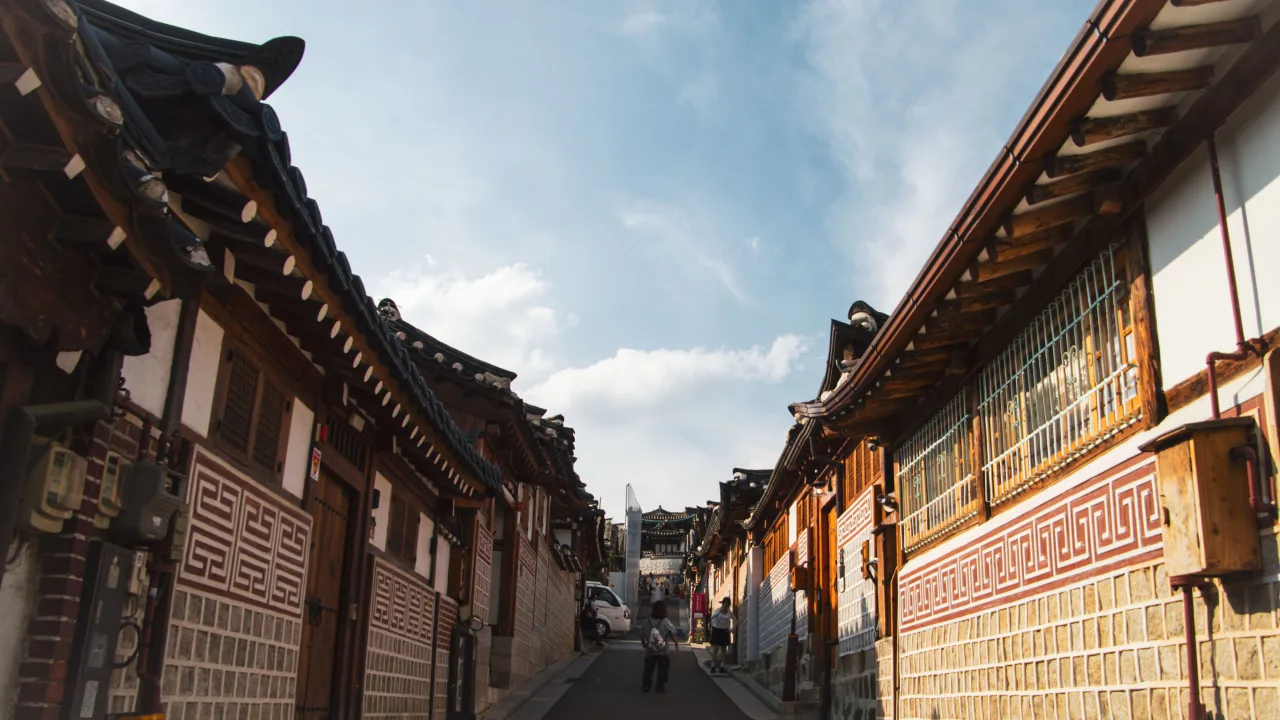
- Bukchon hanok street — Photo by Saksham Vikram on Pexels, Pexels License. Cropped, resized, and converted to WebP.
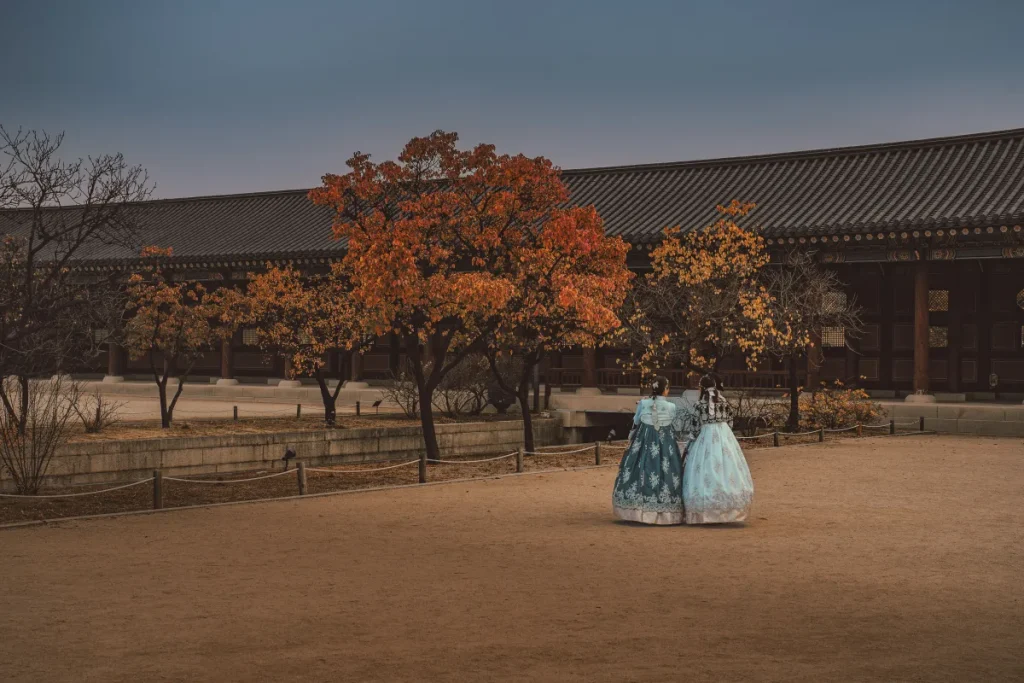
- Gyeongbokgung Palace and hanbok — Photo by Alexander London on Pexels, Pexels License. Resized and converted to WebP.
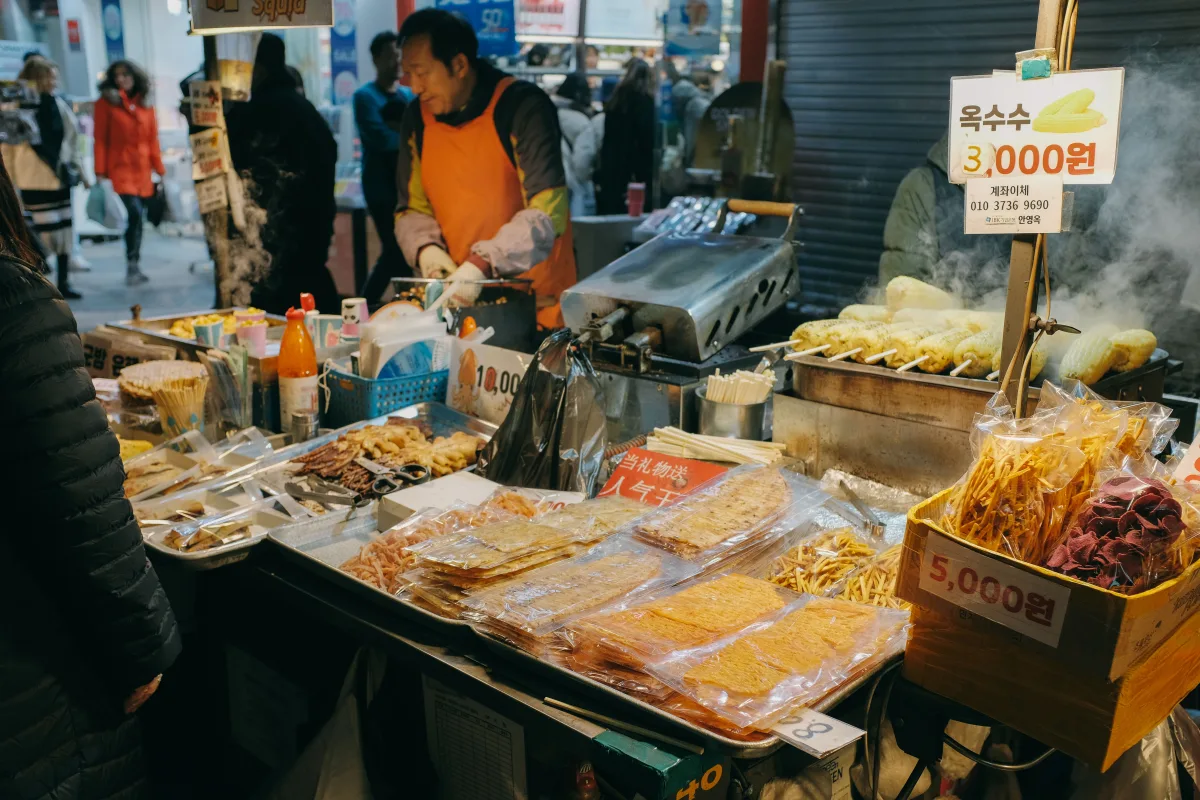
- Seoul market food stall — Photo by Huy Phan on Pexels, Pexels License. Resized and converted to WebP. Prices visible in the scene are not current price guidance.