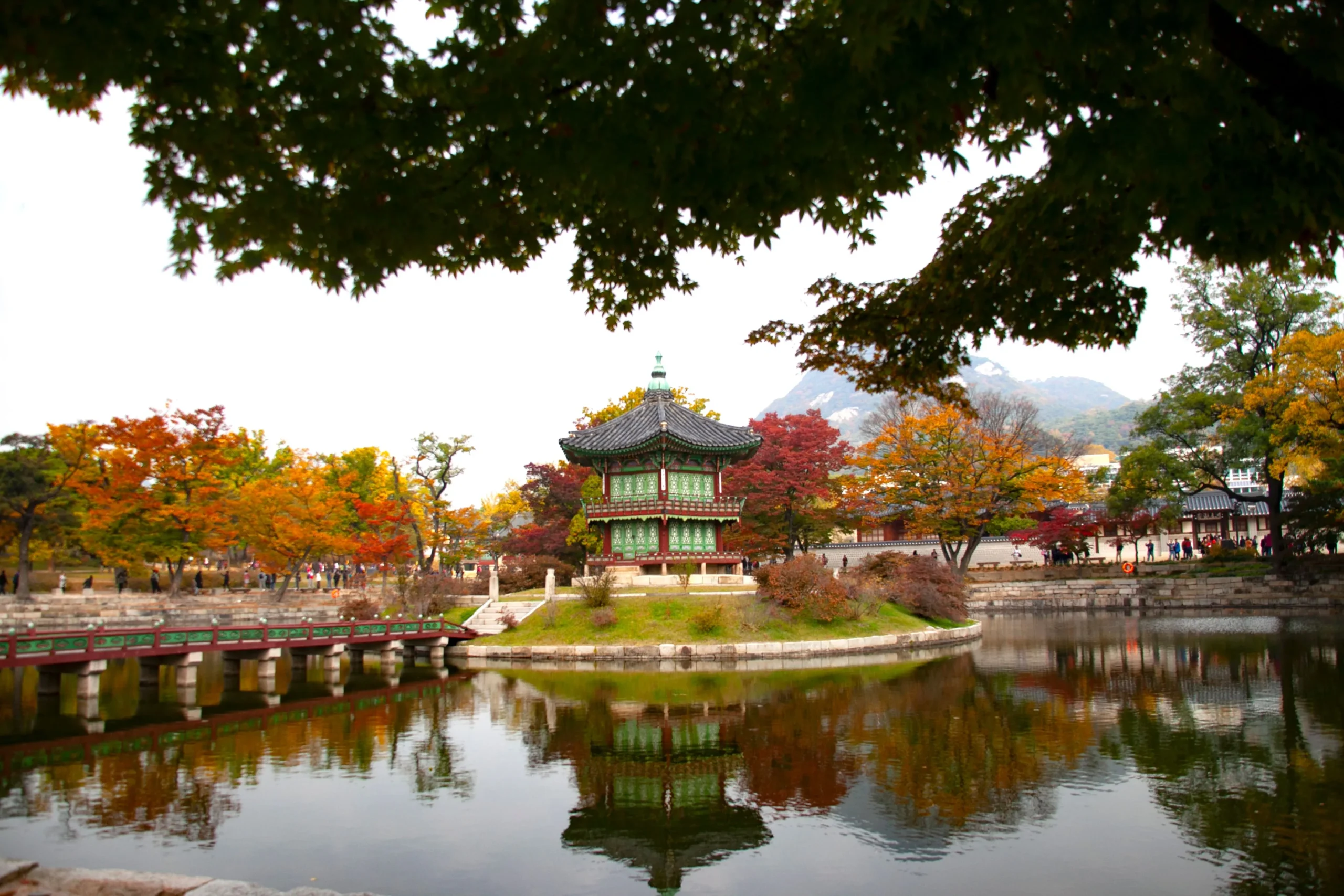
November in Seoul is a transition problem before it is a packing problem. Early-month afternoons can support a longer outdoor block, while a late-month or below-normal forecast can make the same palace, riverside, or evening route feel much longer.
Choose how much of each day will be outdoors first. Then use removable layers to support that plan instead of treating one monthly average as the answer for the whole month.
Quick answer
Use early, mid-, or late November to set the baseline. Put the longest slow-moving outdoor block on the itinerary, then choose a layer you can carry indoors and put back on before the evening.
Quick answer: set outdoor time first, then choose removable layers
The table below turns Seoul’s 1991-2020 climate normals into a starting point for packing. These are historical averages, not a forecast. If the current forecast is warmer, colder, wetter, or windier, change the outfit accordingly.
| Travel period | Normal daily high / low | Practical starting point | Useful item to carry |
|---|---|---|---|
| November 1-10 | 15.3°C / 6.3°C (60°F / 43°F) | Long-sleeve top, trousers, removable knit or sweatshirt | Light jacket or mid-weight outer layer |
| November 11-20 | 11.4°C / 3.3°C (53°F / 38°F) | Long sleeves plus knitwear or fleece | Coat or light padded jacket that is easy to remove indoors |
| November 21-30 | 9.0°C / 1.1°C (48°F / 34°F) | Warm mid-layer with a coat or light padded jacket | Scarf or light gloves for cold, windy, or evening plans |
Treat those clothing suggestions as a planning framework, not temperature safety rules. Cold tolerance varies, and a sunny afternoon spent walking feels different from an hour standing in an open palace courtyard after sunset.
Early and late November change how long you can stay outside
Seoul’s November monthly normals are a mean temperature of 7.5°C, a mean daily high of 11.9°C, and a mean daily low of 3.5°C. The month changes enough, however, that those three numbers do not tell you what to wear.
| Part of November | Mean temperature | Mean daily high | Mean daily low | Ten-day precipitation normal |
|---|---|---|---|---|
| Early: 1-10 | 10.6°C | 15.3°C | 6.3°C | 17.4 mm |
| Middle: 11-20 | 7.1°C | 11.4°C | 3.3°C | 19.9 mm |
| Late: 21-30 | 4.8°C | 9.0°C | 1.1°C | 13.8 mm |
The day-to-night difference is about 8-9°C in each period. What changes most is the baseline: both the daytime high and nighttime low move downward. The daily normals illustrate that shift. November 1 has a normal high of 15.7°C and low of 6.1°C, while November 30 has a normal high of 8.0°C and low of 0.3°C.
This is why advice from someone who visited during the first week can be a poor match for a trip at the end of the month. Early in November, a jacket may spend part of a sunny afternoon in your bag. Late in the month, you may want it from the moment you leave the hotel, especially when the forecast is below normal.
Match the layer to the slowest outdoor part of the day
Start with three pieces that can work in different combinations: a long-sleeve base, a knit or fleece mid-layer, and an outer layer that blocks some wind. You do not need to wear all three at once. The point is to remove one layer inside a heated subway, department store, museum, or café and put it back on before a colder walk.
As a practical starting point:
- If the forecast high is around 14-17°C and the low is around 5-8°C, begin with long sleeves and a removable knit or sweatshirt. Carry a light jacket for the morning and evening.
- If the forecast high is around 9-13°C and the low is around 1-5°C, use a warmer mid-layer and a coat or light padded jacket.
- If the low is near or below 0°C, or strong wind is expected, move one step warmer. Add a scarf, gloves, or a warmer outer layer when you will be outside for a long time.
These ranges are editorial guidance built from the climate data, not an official clothing chart. A visitor arriving from a tropical climate or someone who gets cold easily may need the warmer option sooner. A traveler moving quickly between indoor stops may need less.
Bring comfortable, broken-in, closed-toe walking shoes. A Seoul sightseeing day can involve long station corridors, stairs, stone palace paths, and more walking than the map suggests. New boots that have not been worn before the trip are a larger risk than shoes that look less seasonal.
Use the itinerary, not only the forecast high
The forecast high does not describe the whole day. Match what you carry to the parts of the itinerary when you will be outside and moving slowly.
Palaces and traditional neighborhoods: Open courtyards and slow photo stops mean less continuous movement. Keep the outer layer with you even when the afternoon high looks manageable. Thin gloves can be useful late in the month if the forecast is cold.
Namsan, riverside walks, and viewpoints: Elevated or open areas can feel less sheltered. Check the wind forecast as well as temperature, and carry a layer that blocks wind rather than adding only a thicker knit.
Evening markets and long outdoor queues: Dress for the temperature at the time you expect to finish, not the afternoon high. A scarf or compact extra layer takes little space and is easier to use than returning to the hotel.
Indoor-heavy days: Museums, cafés, shopping areas, and subway rides reduce exposure. Wear thinner layers that are easy to remove instead of carrying the heaviest coat by default.
If children, older relatives, or cold-sensitive travelers are in the group, plan separate layers for them. One outfit rule for the whole party is rarely useful when people move at different speeds and tolerate cold differently.
Cold rain changes the route before it changes the packing list
Seoul’s November precipitation normal is 51.1 mm for the entire month. That number does not tell you whether it will rain on your dates, how long rain will last, or whether it will arrive with wind. Use it only as background context.
For a mostly indoor day with a low chance of rain, a compact umbrella may be enough. If several outdoor hours and rain are forecast together, add a water-resistant outer layer, shoes that can handle wet pavement, and spare socks. A second pair of walking shoes is useful on a longer trip if luggage space allows, but it is not an automatic November requirement.
Cold rain can matter more than the rainfall total. If wind and rain are both expected, shorten an exposed riverside or viewpoint plan and keep an indoor alternative for that part of the day. Clothing does not have to solve a poor weather itinerary by itself.
Do not pack for first snow as though it happens on a fixed date. Near-freezing late-November normals show why a cold spell is possible, but only a current forecast can tell you whether snow, ice, or unusually low temperatures are relevant to your trip.
Use normals for the range and forecasts for the actual day
Use the early-, mid-, and late-November normals to choose the range of layers you may need. They are historical averages, not a forecast for your dates.
About a week before departure, use the KMA medium-range forecast for Seoul’s expected highs, lows, and precipitation probability. If the period is below normal, move to the warmer outer-layer option; if it is above normal, keep the system removable rather than packing a second wardrobe.
Use the KMA short-range forecast for the hours when the itinerary is outdoors. Wind and rain can shorten a riverside or viewpoint block even when the daily high looks manageable.
The final decision needs three inputs: your part of November, the current forecast, and the slowest outdoor block. Once those are set, use a practical three-day Seoul itinerary to adjust the pace and indoor/outdoor balance of each day.
Official sources
- Korea Meteorological Administration – 1991-2020 climatological normals
- Korea Meteorological Administration Open MET Data Portal – Seoul climate normals
- Korea Meteorological Administration – Medium-Range Forecasts
- Korea Meteorological Administration – Short-Range Forecasts
- Korea Tourism Organization – Climate
Image credits
- Hyangwonjeong Pavilion and autumn foliage at Gyeongbokgung Palace — 대정 김, Pexels, Pexels License. Original proportions retained and converted to WebP at quality 82.