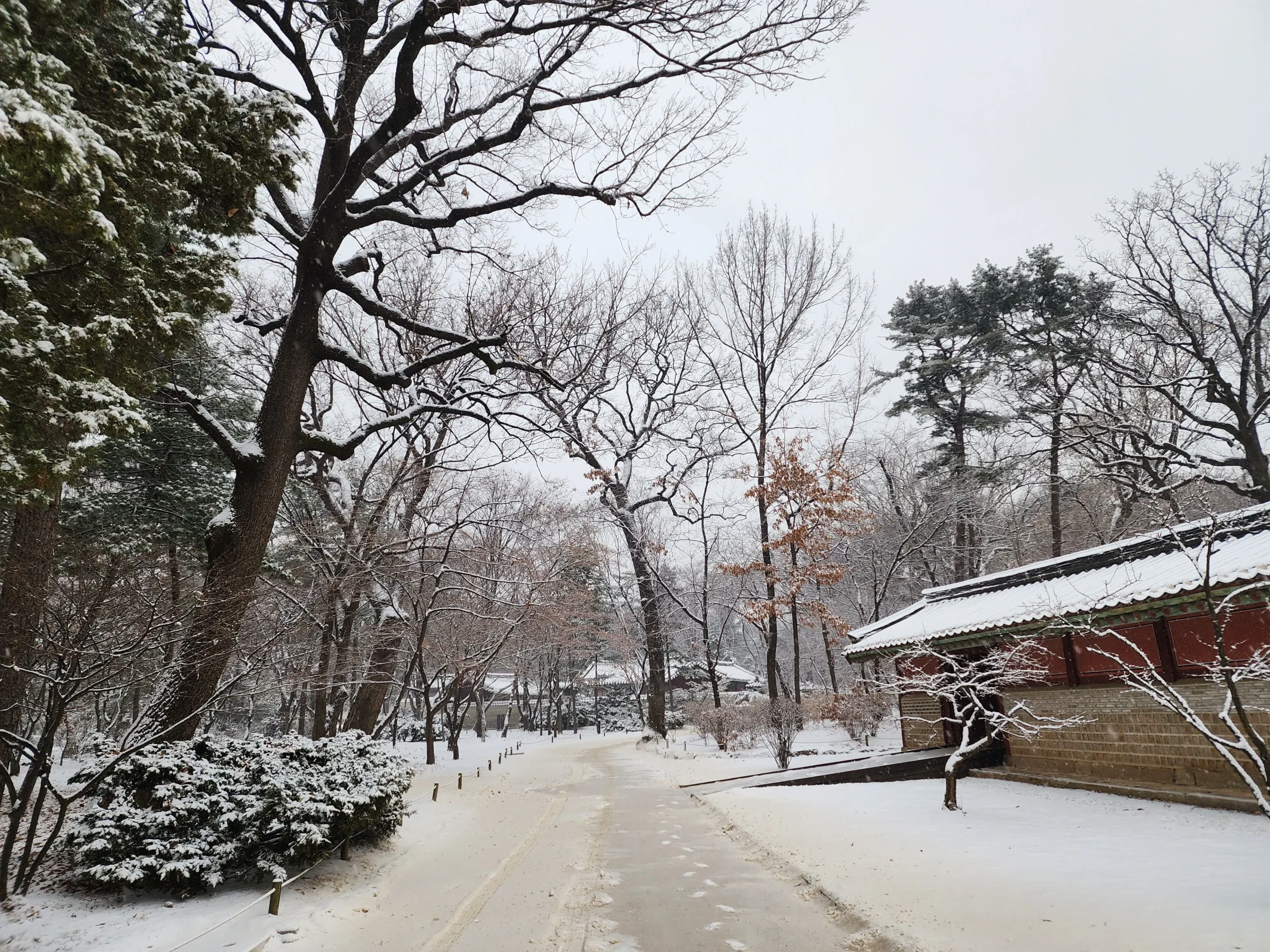
A December day in Seoul can begin below freezing, warm up inside the subway, and turn sharply cold again while you wait for the palace lights or walk back after dinner. That is why one enormous sweater is rarely the best answer. You need clothes you can peel off indoors and put back on without unpacking your whole bag.
For most trips, start with a long-sleeve top, add a knit or fleece, and wear a padded or insulated coat that blocks the wind. Keep gloves and a scarf close at hand. Then adjust that basic outfit for your dates and for the kind of day you have planned.
Quick answer
Pack one adjustable winter outfit: a long-sleeve or thermal base, a removable knit or fleece, and a wind-blocking winter coat. Use your December dates as the starting point, then change the layers for the latest forecast and the hours you will spend outside.
Build one winter system for cold, heated interiors, and slippery days
December is winter from the first week. Seoul's usual daytime high for the month is 4.2°C (40°F), with nights and mornings averaging -3.4°C (26°F). Late December is a little colder than early December, but the bigger surprise may come from the weather during your particular week.
This table is a good place to start packing. Check the Seoul forecast before you fly and change the layers if your week looks warmer, colder, or windier.
| When you are going | Usual high / low | A sensible starting outfit | Keep in your day bag |
|---|---|---|---|
| December 1-10 | 5.8°C / -1.9°C (42°F / 29°F) | Long sleeves, a warm knit or fleece, and a winter coat | Gloves or a scarf for mornings, evenings, and windy stops |
| December 11-20 | 3.7°C / -3.8°C (39°F / 25°F) | A thermal top, removable middle layer, and padded or insulated coat | Hat, gloves, and scarf if you will be outside for hours |
| December 21-31 | 3.2°C / -4.4°C (38°F / 24°F) | A thermal base and warm middle layer under a wind-blocking coat | Full cold-weather accessories, especially after sunset |
If you come from a warm climate or feel the cold easily, add the thermal base or warmer middle layer shown in the colder rows. If you run warm and have a day full of museums, cafés, and shopping, choose a lighter middle layer under the same coat.
Try to pack clothes that work together. A thermal top, a few ordinary long-sleeve shirts, one or two middle layers, and one dependable coat will take you further than several bulky outfits that only work as complete sets.
Make three linked decisions: choose removable warmth for heated interiors, place warm-up breaks around the longest exposed route, and let the short-range forecast decide whether your grippiest footwear is needed. Do not solve each condition with a separate bulky outfit.
Early and late December can require different levels of protection
Early December is not really an extension of autumn. The first ten days usually have afternoons around 5.8°C (42°F) and mornings or nights around -1.9°C (29°F). By the last part of the month, those figures are closer to 3.2°C (38°F) and -4.4°C (24°F).
That change matters, but it should not decide your whole suitcase. A cold spell in early December may feel harsher than a milder week near Christmas. Use the dates to pick your basic layers, then let the current forecast settle the choice between a regular long-sleeve top and a thermal one, or between a shorter insulated jacket and a warmer coat.
Morning and evening deserve their own plan. Temperatures usually drop several degrees from the afternoon, so an outfit that feels fine during a sunny lunch stop may feel thin after dark. If your itinerary runs from a palace morning to an evening market, take the colder end of the day seriously.
Turn the forecast into a three-layer clothing plan
You do not need a different winter wardrobe for every temperature. Three layers give you enough room to adjust.
Start with the layer against your skin
An ordinary long-sleeve top works on a milder day with plenty of indoor stops. Choose a thermal top when the day stays near freezing, you feel the cold easily, or you expect to spend several hours outside. Full-length trousers are the ordinary starting point. Add lightweight thermal leggings only for a colder, outdoor-heavy day if you know you feel the cold, because they can feel stifling during an afternoon in heated buildings.
Add warmth you can remove
A knit, sweatshirt, or fleece is the useful middle piece. Make sure it fits comfortably under your coat and is easy to take off. Seoul's trains, department stores, museums, and cafés are heated, so you will probably open your coat or remove this layer more than once.
Let the coat handle the wind
A padded or insulated coat is a sensible choice for December. Warmth matters, but so does keeping cold air out. A longer coat is helpful if you are sensitive to cold, although you do not need a particular Korean-style long padded coat if the one you own is warm and wind resistant.
Before getting dressed, glance at the day's high and low, then check the wind. On a mild, indoor-heavy day, wear a lighter base and keep the middle layer removable. When the low is far below freezing or the day is windy, use the thermal layer and take the warmer accessories.
If Seoul issues a cold-wave alert, do not treat it as an ordinary winter day. Cover your hands, ears, and neck, shorten long outdoor stretches, and move more of the itinerary indoors if needed.
Adjust for outdoor exposure and heated indoor spaces
Where you are going matters almost as much as the number on the weather app.
A morning at Gyeongbokgung or a slow walk through Bukchon includes open courtyards, stone paths, and frequent photo stops. You may not be moving fast enough to stay warm, so keep the coat on and put your gloves somewhere easy to reach.
Namsan, riverside paths, and open viewpoints can feel harsher when the wind picks up. On those days, a wind-blocking coat will help more than piling on another loose sweater. If the forecast looks particularly cold or gusty, shorten the exposed part of the route and choose a nearby indoor stop for the rest of the afternoon.
Evening markets, winter lights, and outdoor queues call for a slightly different day bag. Dress for the hour you expect to finish, not the temperature when you leave after lunch. Gloves and a hat are far more useful in an outer pocket than buried under a camera and shopping bags.
For a day built around museums, cafés, malls, and subway rides, keep the layers lighter underneath your coat. You will spend much of the day moving between warm spaces. A coat that unzips easily and a middle layer you can remove will be more comfortable than heavy thermals you have to wear until you return to the hotel.
Do not expect everyone in the group to dress the same way. Children, older relatives, and anyone who gets cold quickly may need their own hat, gloves, or thermal layer even when everyone else is comfortable.
Pack for slippery days without assuming it will snow
It can snow in Seoul in December, but a December booking does not guarantee snowy streets. There is no need to buy specialist snow boots just for the possibility.
For a dry forecast, start with familiar closed-toe walking shoes with a grippy sole. If snow, sleet, or ice appears in the forecast, use your grippiest water-resistant pair. Seoul involves long station corridors, stairs, and stone palace paths. Shoes you already trust are usually safer than stiff new boots that start rubbing before lunch.
If snow, sleet, or ice appears in the short-term forecast, switch to your grippiest pair. Take shorter steps on slippery pavement, keep your hands out of your pockets, and put the phone away until you are standing somewhere secure.
The rest of the winter kit can stay small:
- one spare pair of warm socks;
- gloves, a scarf, and a hat that fit in your day bag;
- lip balm and moisturizer if cold, dry air bothers you;
- a compact umbrella when rain or snow is actually expected;
- a water bottle for long days in heated, dry rooms.
A monthly climate normal does not tell you what will happen on your dates. Let the near-term forecast decide whether the umbrella, water-resistant coat, or second pair of shoes comes out of the suitcase.
Recheck the official forecast before closing the suitcase
Use the averages now. Use the forecast later.
A simple four-step setup in English
1. Keep your usual weather app for a quick look. Save Seoul before the trip so the temperature is easy to find. Use it for a fast morning glance, but do not stop at the large temperature shown on the home screen. Open the hourly view and look for wind, rain, or snow during the hours you will be outside.
2. Check the Korean forecast about a week before you fly. Open the Korea Meteorological Administration medium-range forecast in English and find Seoul. Compare the expected highs and lows with the table above. If your week looks colder, pack the warmer base layer and accessories. If it looks milder, keep the winter coat but lighten what you wear underneath.
3. Check again each morning in Seoul. The KMA short-range forecast gives the closer view you need for a palace visit, riverside walk, viewpoint, or evening outside. Check the hours you will actually be out. This is when to decide whether gloves go into your pocket, whether you need shoes with more grip, or whether an exposed walk should become a museum afternoon.
4. Use an English alert source when the weather turns serious. The KMA English homepage shows current weather and severe-weather alerts. Travelers who want disaster notices in English can also install the Emergency Ready App, which Seoul says provides information in 22 languages. Check these alerts when heavy snow, strong wind, or a cold wave could change the day's plan.
You do not need four different weather apps. Your familiar app is fine for convenience; the KMA pages and Emergency Ready App are there when you need Korea's official forecast or alerts.
In short, pack one adjustable winter outfit and enough pieces to repeat it in different combinations. Match it to your dates, your outdoor plans, and the latest weather. You will stay warmer outside without spending every subway ride wishing you could change clothes.
Official sources
- Korea Meteorological Administration – 1991-2020 climatological normals
- Korea Meteorological Administration Open MET Data Portal – Seoul climate normals
- Korea Meteorological Administration – Medium-Range Forecasts
- Korea Meteorological Administration – Short-Range Forecasts
- Korea Meteorological Administration – English Weather Homepage
- Seoul Metropolitan Government – Useful Information for Your Trip to Seoul
- Seoul Metropolitan Government – Four Seasons and Climate
- Seoul Metropolitan Government – Winter Season and Cold-Wave Guidance
- Seoul Metropolitan Government – Guide for Safe Travel in Seoul
- Seoul Metropolitan Government – Emergency Ready App
Image credits
- Snow-covered winter path beside traditional architecture in Seoul — 대장 문, Pexels, Pexels License. Original proportions retained and converted to WebP at quality 82 without cropping, resizing, text, or overlays.