Quick answer
Use one primary card, keep a separately issued backup card elsewhere, and carry a limited won reserve. For a mostly card-based Seoul trip, ₩50,000 per person is a reasonable starting emergency reserve; add your expected transit-card load and planned cash-only spending.
You do not need to carry your entire Korea budget in cash. You also should not arrive with one card and assume every terminal, ticket machine, and ATM will treat it the same way.
For most first-time visitors, the practical setup is simple: use a card for ordinary purchases, keep a second card separate, and carry enough Korean won for transit-card loading, small cash-only stops, and one day when payments go wrong. The aim is to make sure one decline cannot stop the trip.
Quick answer: bring a payment stack, not one perfect method
Prepare these layers before departure:
- A primary Visa or Mastercard with international use enabled and fees checked.
- A backup card from a different issuer, ideally on a different network, stored separately.
- A card enabled for overseas ATM withdrawals, with the correct PIN.
- A small won reserve built around your itinerary, not your full daily budget.
- An optional phone wallet or tourist prepaid card only if you have confirmed that it solves a specific problem.
Cards are widely accepted in Korea, according to VISITKOREA’s currency guide. Yet the same tourism authority notes that some traditional-market and street businesses may be cash-only. Regular Tmoney transit-card purchase and top-up is another important exception for foreign visitors.
If your trip is mainly in Seoul and you expect to pay by card, ₩50,000 per person is a reasonable starting emergency reserve, not a universal daily allowance. At the dated mental rate used below, that is about US$37. Add the cash you expect to load onto a transit card and any planned market or street-food spending. A four-day visitor might therefore plan to have roughly ₩100,000 in cash, not ₩100,000 every day, then refill only if the itinerary uses it.
Compare the payment options
| Method | Best role | Main advantage | Common weak point | Backup move |
|---|---|---|---|---|
| Foreign credit or debit card | Most shops, restaurants, hotels, and larger purchases | Convenient, traceable, and avoids carrying the full budget | One issuer, terminal, kiosk, or online checkout may decline it | Try chip instead of tap, then use the separate card |
| Korean won cash | Transit-card loading, some markets and street stalls, emergencies | Works without a phone, issuer approval, or network connection | Loss is difficult to recover; too much creates risk | Carry a limited reserve and replenish at a compatible ATM |
| Global ATM | Replenishing won during the trip | Lets you avoid converting the whole budget before departure | The first machine may reject the card; operator and issuer fees can stack | Use another bank’s Global ATM and contact the issuer before repeated attempts |
| Mobile wallet | Fast contactless payment where your device, card, and terminal all work | No need to take out the physical card | Provisioning and acceptance are not universal | Carry the physical card and cash |
| Tourist prepaid card | A domestic payment fallback or spending-control tool | Can help where a foreign-issued card fails | Setup, top-up, refund, and separate transit balance add complexity | Use it only when its exact use case justifies the extra account |
The safest layers are independent. Two cards from the same issuer sitting in the same wallet are not fully independent. Neither are a physical card and a phone wallet linked to that same card.
How expensive does Korea feel in US dollars?
There are two useful answers, and they are not the same.
The broad answer: the OECD’s May 2026 comparative price-level table puts Korea at 58 when the United States is 100. That helps explain why public transport and many everyday Korean meals can feel inexpensive to a US visitor. But it is an economy-wide comparison, not a tourist basket. Your hotel, imported products, premium coffee, nightlife, Western food, and purchases in heavily visited districts may not feel 42% cheaper.
For travel planning, build a won-to-dollar ladder and attach it to things you can picture.
The latest Federal Reserve observation available when this guide was checked was ₩1,340.30 per US$1 for the week ending September 11, 2026. For easy mental arithmetic, this article rounds that to US$1 ≈ ₩1,350:
| Korean won | Rough US-dollar picture at ₩1,350 per $1 |
|---|---|
| ₩1,000 | $0.75 |
| ₩5,000 | $3.70 |
| ₩10,000 | $7.40 |
| ₩50,000 | $37 |
| ₩100,000 | $74 |
Now connect that ladder to current reference prices:
- A Seoul subway base fare is ₩1,550 with a transit card, about $1.15.
- A daytime regular-taxi ride starts at ₩4,800 for the first 1.6 kilometers, about $3.55 before distance, time, or late-night additions.
- A gimbap roll averaged ₩3,869 in Seoul in the Korea Consumer Agency’s July 2026 data, about $2.90.
- An ordinary meal near ₩10,000 is about $7.40. A July 2026 cold-noodle average of ₩12,692 is about $9.40.
- Coffee is a poor single price anchor. A current low-cost-chain example is ₩1,400 for a small iced Americano, while one independent-café example is ₩5,500, roughly $1 to $4.
The spread matters. Korea may feel inexpensive when you take the subway, eat local dishes, and use value coffee chains. It can feel much closer to US-city pricing when you choose a design café, hotel lounge, imported brand, cocktail bar, or premium restaurant.
Recheck the exchange rate before travel. A bank, card network, ATM, or exchange counter will not necessarily give you the reference rate because fees and spreads may apply.
Build your cash reserve from the itinerary
Do not ask, “How much cash do I spend per day?” Ask, “Which parts of my next day may require cash?” Most card purchases do not need to be included in the cash reserve at all.
Use this formula:
transit cash + planned cash-only spending + emergency reserve = cash to keep available
1. Transit cash
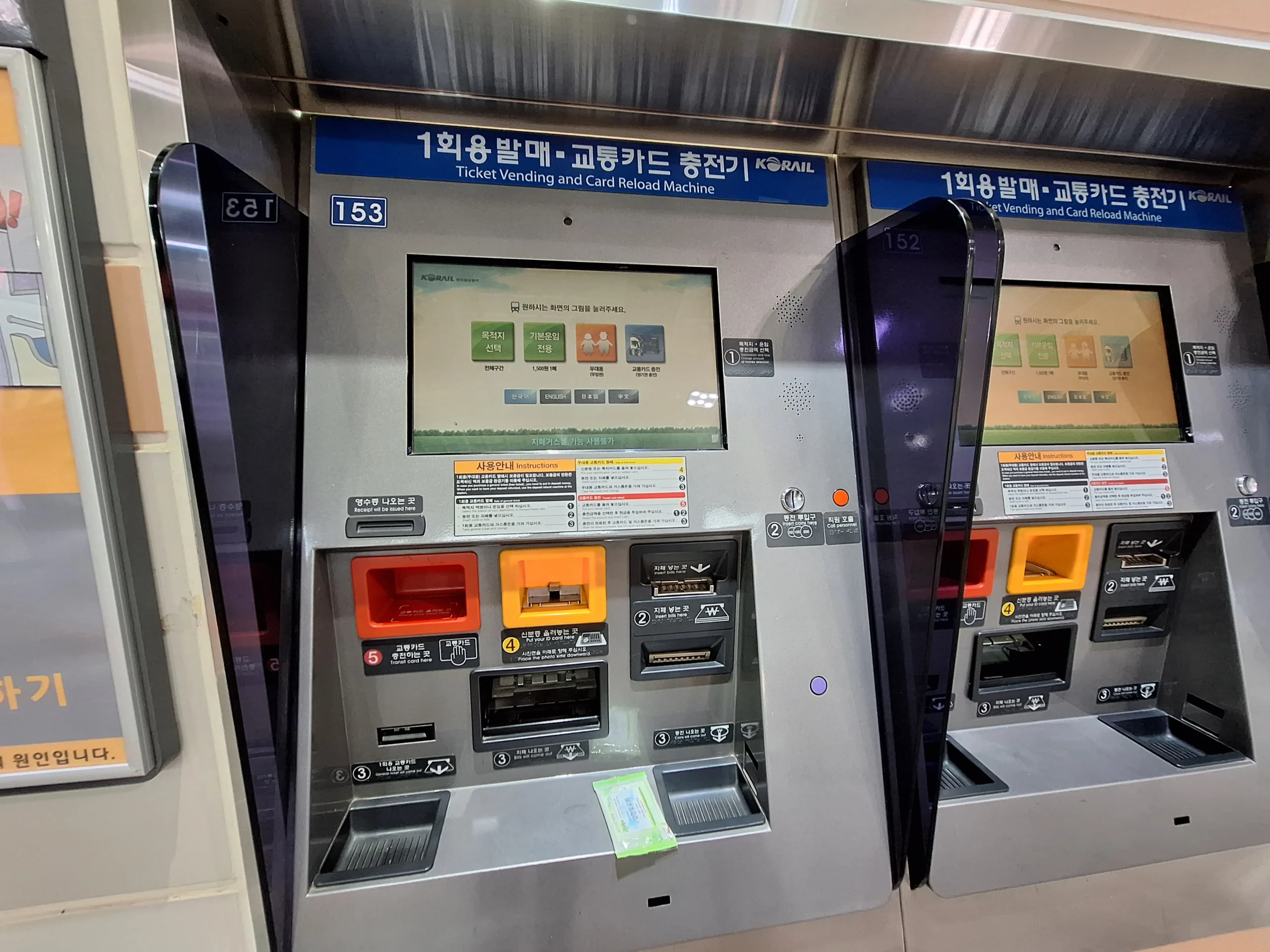
The Korea Tourism Organization’s May 2026 visitor transport guide says ordinary Tmoney purchase and top-up at convenience stores and subway stations is cash-only when the visitor has a foreign-issued card. It separately lists newer machines that accept foreign cards for certain single-use tickets and passes. That does not mean every Tmoney top-up now accepts an overseas card.
Estimate your likely rides, include the card purchase price, and load a modest first amount. Four subway rides a day for four days at the current base fare would be about ₩24,800 before longer-distance additions. Rounding that part of the plan to ₩30,000 leaves some room without trapping a large balance on the transit card.
If you have not chosen a transit product yet, compare the Seoul Climate Card and T-money before deciding how much cash to allocate for transport.
2. Planned cash-only spending
Add what you deliberately expect to spend at markets, street stalls, or a business that has already said it wants cash. This is not a guess for every meal. If you plan one market visit and would be comfortable spending ₩20,000 there, add ₩20,000. You do not need a vague daily allowance for the entire trip.
3. Emergency reserve
Keep about ₩50,000 separate from the day’s small bills if your itinerary is mostly urban and card-based. That amount is enough to cover a few ordinary meals or several short transport contingencies without turning your wallet into the trip treasury. Increase it for rural travel, a long day trip, late arrival, or any period when a compatible ATM may be difficult to reach.
For the four-day example, ₩30,000 for transit + ₩20,000 for a market + ₩50,000 emergency cash equals ₩100,000, roughly $74 at the article’s mental rate. This is an example of the method, not an official recommendation for every traveler.
Use a Global ATM without making it the only backup
An ATM can be easy to see and still be the wrong machine for an overseas card. Look for “Global ATM” and a logo matching your card network. Korean bank guidance says overseas-issued cards can be used at compatible Global ATMs, while support and fees can vary.
Before leaving home, confirm that the card allows international cash withdrawals, know the PIN, check the daily limit, and understand whether a withdrawal would be treated as a debit withdrawal or a costly credit-card cash advance. Save the issuer’s overseas contact number somewhere other than the wallet.
At the machine:
- Use an ATM in a bank branch, airport, or other well-lit location when possible.
- Confirm the card-network logo and choose the English menu.
- Read the operator fee and currency screen before confirming.
- Take the card, cash, and receipt before walking away.
If the withdrawal fails, do not keep entering the PIN. Retrieve the card, record the message, and try another bank’s Global ATM. Then check the issuer app or call the issuer. A different machine can solve a routing or compatibility problem. Repeated attempts cannot solve a blocked card and may create another problem.
Recover when a card or kiosk declines the payment
A decline does not always mean the account lacks money. The payment channel matters.
At a staffed shop or restaurant, ask to insert the chip if contactless failed. Then use the separate card, followed by cash. Keep enough reserve to pay a restaurant bill or short ride without leaving a passport or other identity document as informal collateral.
At an unattended kiosk, look for another machine or a staffed counter. A kiosk may have a narrower payment setup than the business itself. For rail, bus, or attraction tickets, use an official global website or counter when one is available instead of repeating the same card on the same screen.
For an online booking, check that you are on the service’s foreign-visitor or global page. Confirm the name, billing details, and any authentication request. If the same transaction keeps failing, switch to another official channel or card instead of creating multiple pending authorizations.
Preserve the layers as you go. If the primary card has started failing, do not immediately spend all the cash and drain the prepaid card. Keep one independent way to pay for the return to your accommodation.
Treat phone wallets and tourist prepaid cards as optional tools
A phone wallet is useful only when your foreign card can be added, the Korean terminal supports the required contactless method, and the issuer approves the transaction. Test the wallet, but do not make it the only plan. A dead phone, lost device, or unsupported terminal should not leave you unable to pay.
A tourist prepaid card can be worthwhile if you want a domestic payment layer, spending control, or currency-loading features. VISITKOREA describes options such as WOWPASS, but the shopping balance and transit balance can be separate. Check the card fee, loading method, exchange rate, ATM or refund conditions, and unused-balance process before adding another system.
If two ordinary cards and a small cash reserve already cover your itinerary, the prepaid product may be unnecessary. Add it for a specific convenience, not because you expect foreign cards to fail everywhere.
When the screen offers dollars or won, slow down
A terminal or ATM may offer to convert the transaction into US dollars. This is dynamic currency conversion, or DCC. The familiar dollar amount can feel reassuring, but Visa says the offer includes its own conversion rate and may include an additional fee or markup.
In most cases, choose Korean won (KRW) and let your card issuer or network handle the conversion. Check your card’s foreign-transaction and exchange-rate terms first. A card with a large issuer fee can still be expensive, even when you decline DCC.
The screen should show both amounts, the exchange rate, and the added markup or fee. If those terms are unclear or the machine appears to choose dollars for you, decline the conversion if possible. Cancel the transaction if you cannot confirm what you are accepting.
The five-minute check before departure
- Enable international purchases and ATM use for the cards you plan to carry.
- Check foreign-transaction, cash-withdrawal, and operator-fee policies.
- Confirm the PIN and save issuer contact numbers separately.
- Put the backup card somewhere other than the primary wallet.
- Recheck the won-to-dollar rate and save a simple mental conversion.
- List your transit load, cash-only plans, and emergency reserve.
- Save one Global ATM location near your first accommodation.
Korea is card-friendly enough that most of your budget can stay on cards. It still has enough exceptions that some won matters. Carrying a limited, purpose-built cash reserve and knowing what to try next when a payment fails is more useful than choosing between “cash” and “card” as if only one can win.
Official and primary references
- VISITKOREA: Korean Currency & Exchange Info
- Korea Tourism Organization: 2026 visitor transport payment guide
- Seoul Metropolitan Government: Subway fares
- Seoul Metropolitan Government: Taxi fares
- Visa: Dynamic Currency Conversion
- Federal Reserve via FRED: KRW per US dollar
- OECD: Monthly comparative price levels
Image credit
- Ticket Vending and Card Reload Machine — Seoul Metropolitan Subway, photographed by LandAndTree and licensed under CC BY 4.0. Converted to WebP without cropping, text, or overlays.
